The watershed-to-pond ratio
Rule of thumb in East Texas, and Michael's used this for years, you want at least 10 to 20 acres of upslope watershed for every surface acre of pond. Under that, the pond doesn't get enough runoff to recover from a dry summer. Over that, you risk overflow erosion that the spillway has to handle.
The ratio shifts with rainfall zone and soil. Sandy soil absorbs more runoff before it reaches the pond, so the ratio needs to be higher. Clay soil sheds water fast, so the ratio can be lower.
Bowl shape matters more than size
A bowl that's wide and shallow loses water to evaporation faster than a bowl that's narrow and deep. East Texas summers evaporate a surprising volume from a 1-acre pond, up to a quarter-inch a day in July. A deeper bowl with steeper sides holds longer.
Steep sides also mean less algae growth in the shallows and better stratification for fish if you're stocking. The downside is livestock-access edge has to be planned separately.
Compaction is the seal
On clay soil, proper compaction of the bowl walls and bottom is what seals the pond. Skip the compaction and the pond leaks no matter how thick the clay layer underneath is. We compact in lifts, six inches at a time, packed with the excavator tracks or a sheepsfoot, and the pond seals naturally.
On sandy soil, compaction won't seal it. You need a clay liner trucked in or, in some cases, a bentonite seal at the bottom. We test the soil before bidding so this is a known cost, not a discovery.
Spillway and overflow design
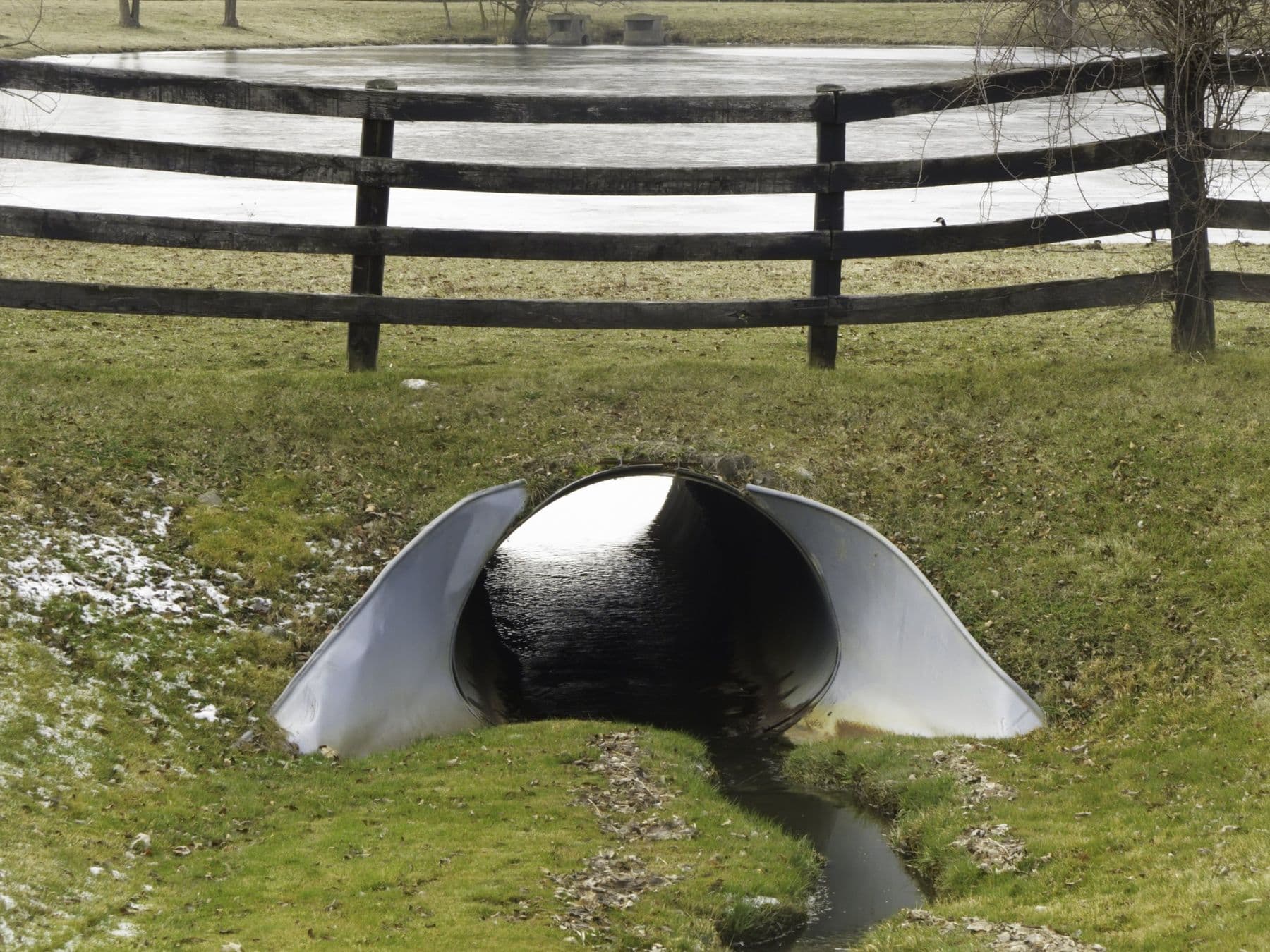
Every pond needs a controlled overflow path. East Texas spring storms can dump 4-6 inches in a day; the pond fills past capacity and the water has to exit somewhere. If the spillway isn't designed and graded for it, the water cuts a new channel, usually through your dam.
We design the spillway at the planning stage, place it on the contour, armor it with rip-rap where needed, and grade the downstream so the overflow doesn't erode your pasture.
Bottom Line
A stock pond is a hundred-year investment if you build it right. The cost difference between a pond that holds and a pond that leaks is mostly at the planning stage. We do the math first.